A Home Made With Intention
Molly lives with her parents in a home that feels carefully made.
Not expensive or showy, but intentional. Paintings line the walls. Objects are placed with an artist’s eye. Color appears where you need it. Light moves through rooms that have been arranged to be both beautiful and usable. Her mother is an artist, and her grandmother was too. You can feel that lineage in the house before anyone says a word.
You can also see how disability changes the architecture.
The family’s home is older, with stairs and smaller transitions that once felt ordinary. Now every doorway, every level change, every bathroom carries weight. They are searching for a ranch-style home where Molly’s bedroom and bathroom can exist on one level, where movement is easier, and energy can be spent on living instead of navigating the house itself.
Despite the challenges of layout in their older home, Molly’s home feels lived in and loved in. This beautiful home thoughtfully focuses on accessibility and coincides with beauty.
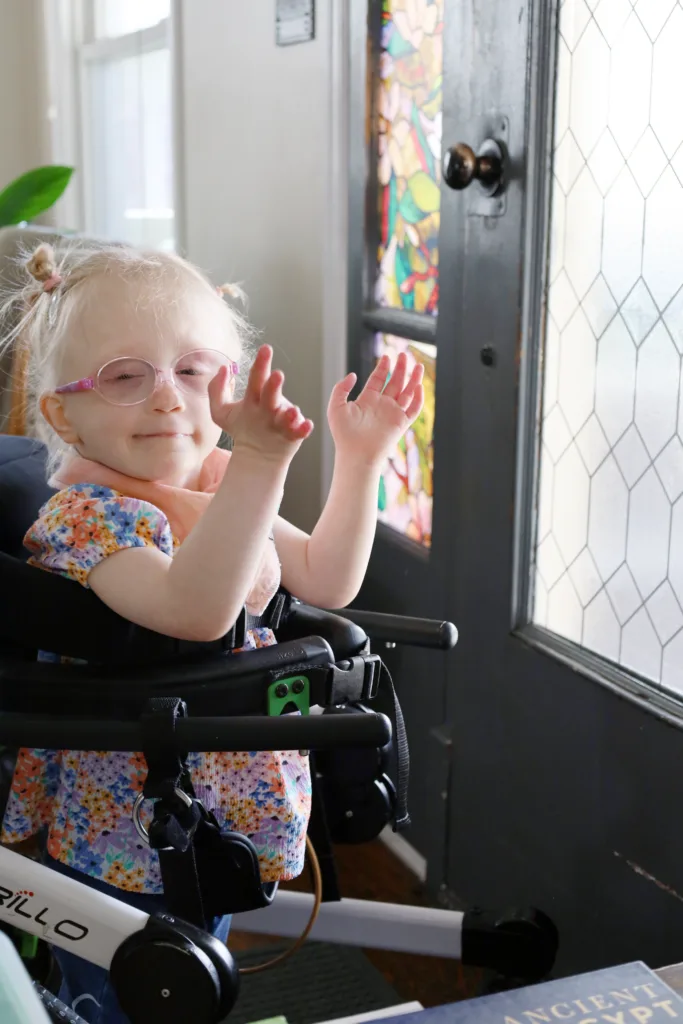
Through the front door, light filters through stained glass in a beautiful way. Molly loves to sit and watch the colors shifting across the walls and floor.
Raised in a Family of Light Makers
Creativity runs deep in Molly’s life. Her mom, Lindsey, is an artist. Her grandmother and great grandmother were, too. Her uncle is a musician. Art is something that has been passed down and carried on.
Every space in Molly’s home feels thoughtfully created—from the light that shines through her bedroom window, touching everything in sight, to a mural painted by Molly’s mom on her bedroom wall that makes the space inspiring.
Lindsey’s thoughtfulness about Molly’s access extends beyond the four walls of her artfully crafted home and into Molly’s community. Lindsey works to connect with other medically complex families to understand the most successful accessible equipment, from specialized chairs to swings to stylish pink eyewear.
Each item is carefully selected by Molly’s parents and represents her personality, medical needs, and support goals.
Traveling Trio
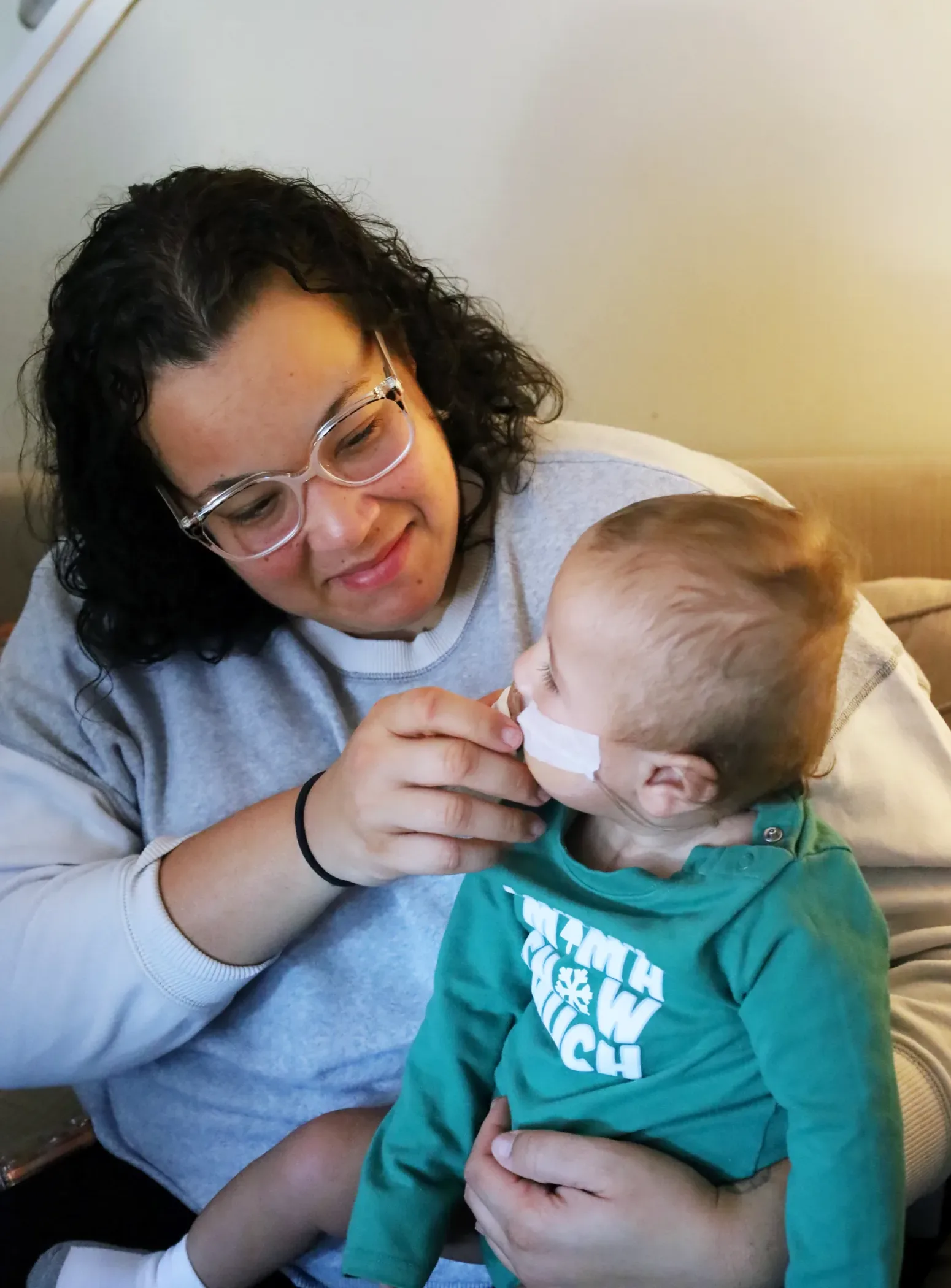
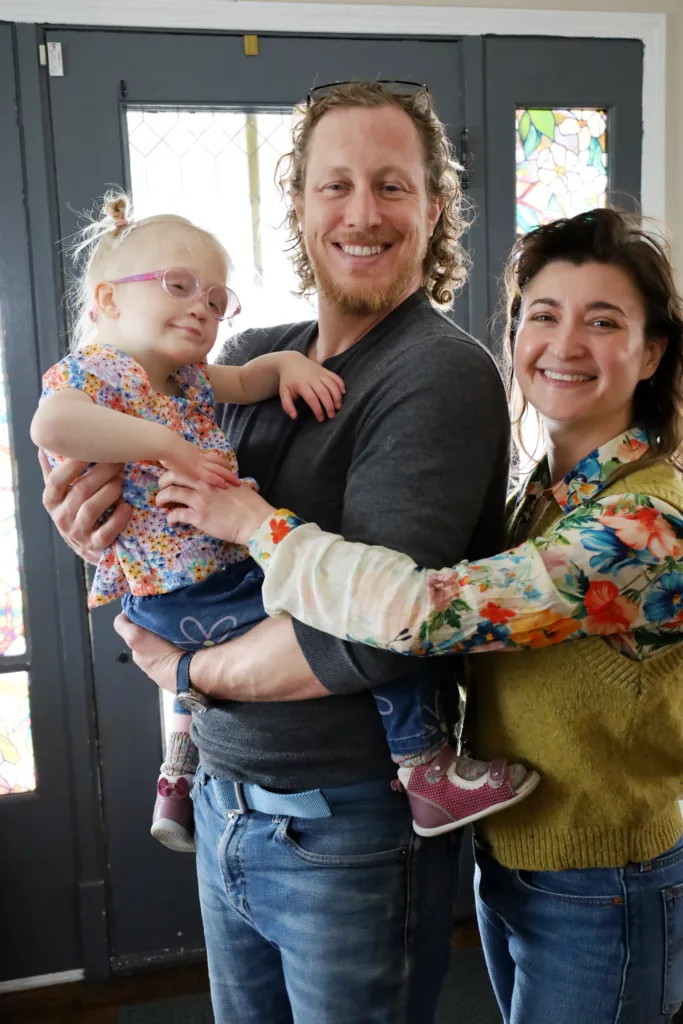
Molly was born during the shutdown days of COVID. Her arrival came with medical complexity, separation, and the kind of uncertainty that asks more of a family than most people ever see. Lindsey safely delivered Molly, then faced the reality of traveling to be near her daughter at Riley while managing her own recovery.
On the surface, Lindsey speaks with a soft and steady kindness. But like so many parents of medically complex children, there is steel beneath it—the kind built quietly through long hospital days, hard decisions, and doing what needs to be done without ceremony.
Before Molly was born, her parents loved to travel. They were the kind of people who chose experience over convenience. That instinct did not disappear when Molly arrived. It simply changed shape.
Now travel requires more planning. There are medications, supplies, schedules, feeding considerations, equipment, and backup plans. There are questions other families may never need to ask. But they go anyway.
Molly has grown up in cars, on planes, in hotel rooms, and in new places. She has seen oceans, city lights, and changing landscapes through a window seat. Her parents have made it clear that disability will shape logistics, but it will not shrink her world. Molly belongs everywhere.
There is even a dream of one day traveling to Norway, to experience the landscape and maybe hear one of her favorite artists, AURORA, in a place that feels made for that kind of music.
What Helps Molly Thrive
Like many children with complex needs, Molly’s progress does not happen overnight. It comes through consistency and the right supports at the right time.
Her parents have become skilled at noticing what helps. Water is one of those places. In the pool, movement comes more freely. Weight shifts differently. Muscles can practice what can be difficult on dry land. Aquatic therapy gives Molly both work and joy in the same hour.
She also responds to rhythm, sound, and motion, so music catches her attention. She especially loves AURORA and everyone’s favorite—Ms. Rachel’s Icky Sticky Bubble Gum song.
Swinging helps her understand where she is in space. Sensory experiences that feel playful often become some of the most productive forms of learning.
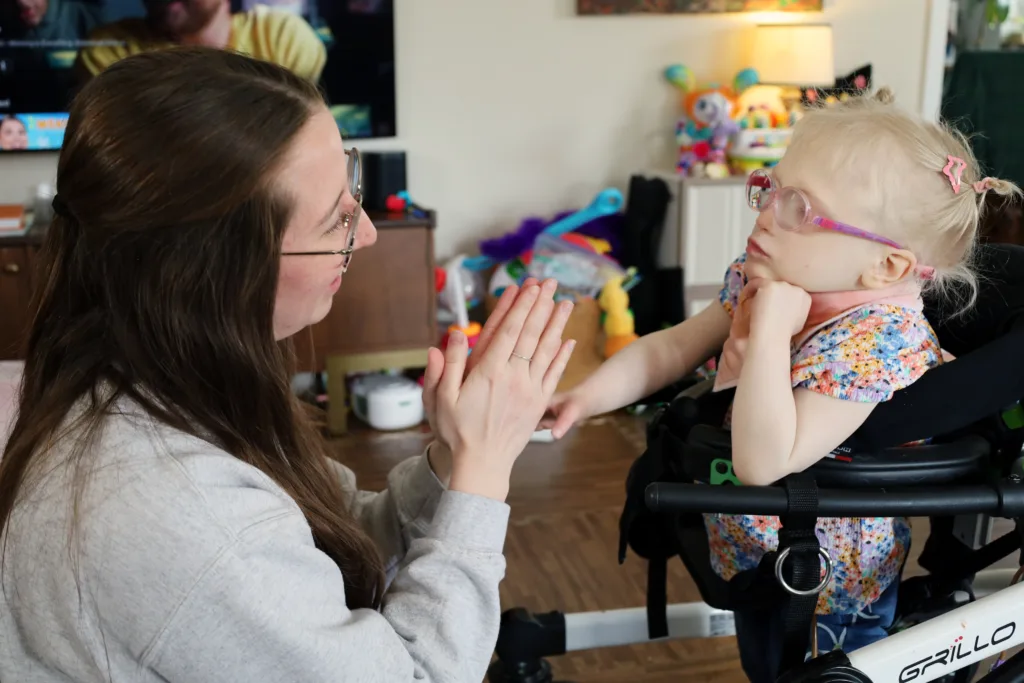
At one point during our visit, we were singing along with Ms. Rachel and Molly rolled straight up, reached out for our hands, and guided us to clap along. No hesitation, just a clear invitation to join her. Connection, on her terms.
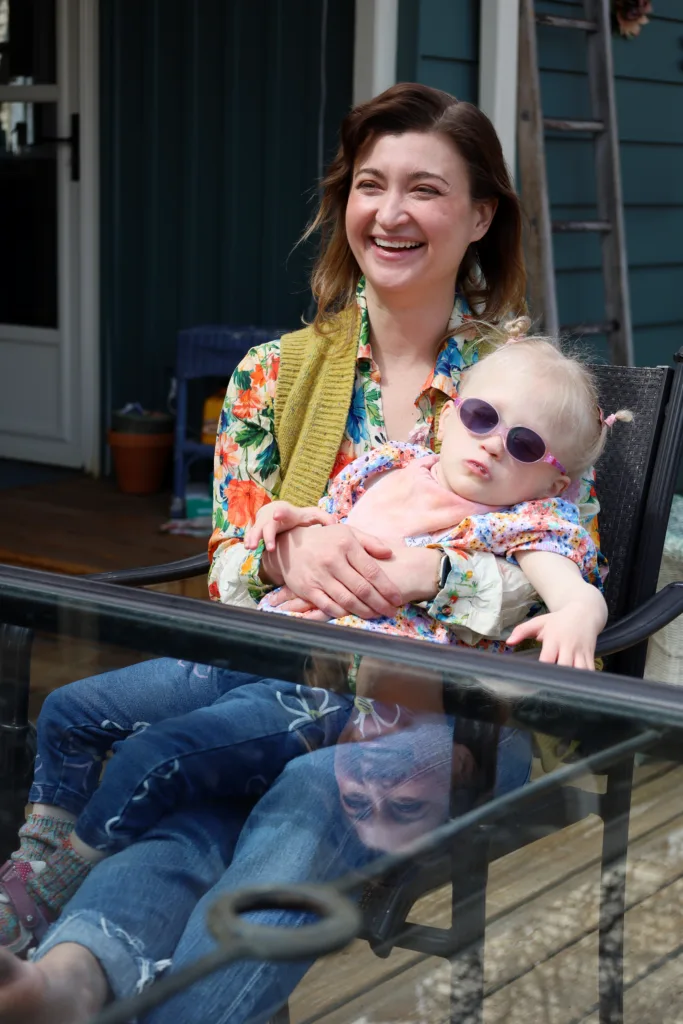
Later, on the deck, she sat on her mom’s lap with a small keyboard in front of them. Again and again, Molly reached for her mom’s hands, gently pulling them toward the keys, asking her to play. Each time, when the music started, Molly lit up. It was simple and joyful, but also her way of initiating, directing, and sharing something she loves.
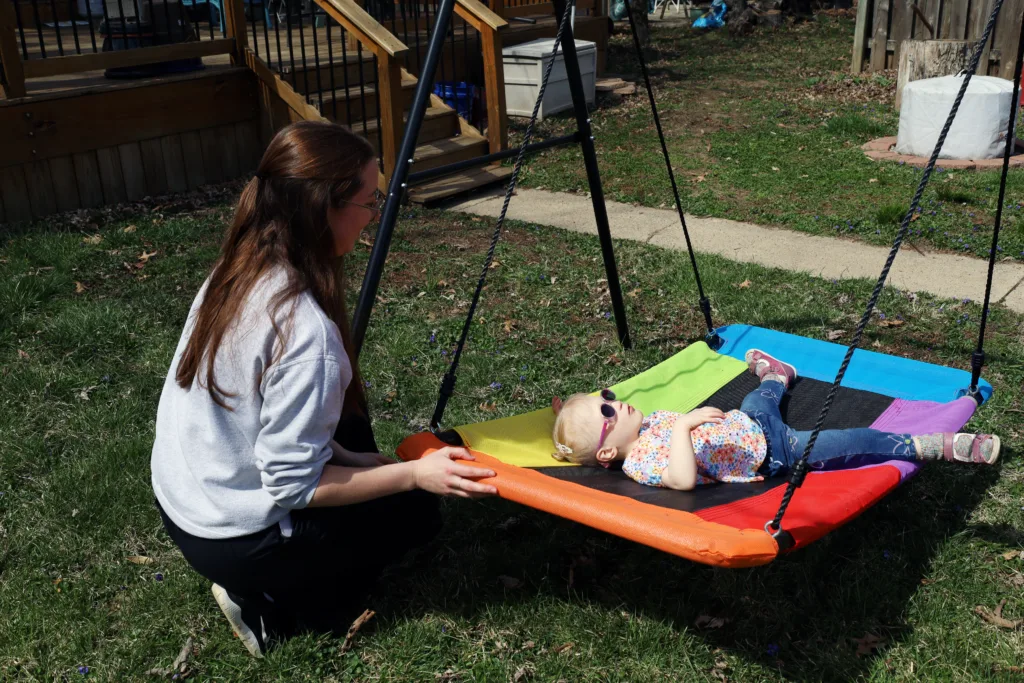
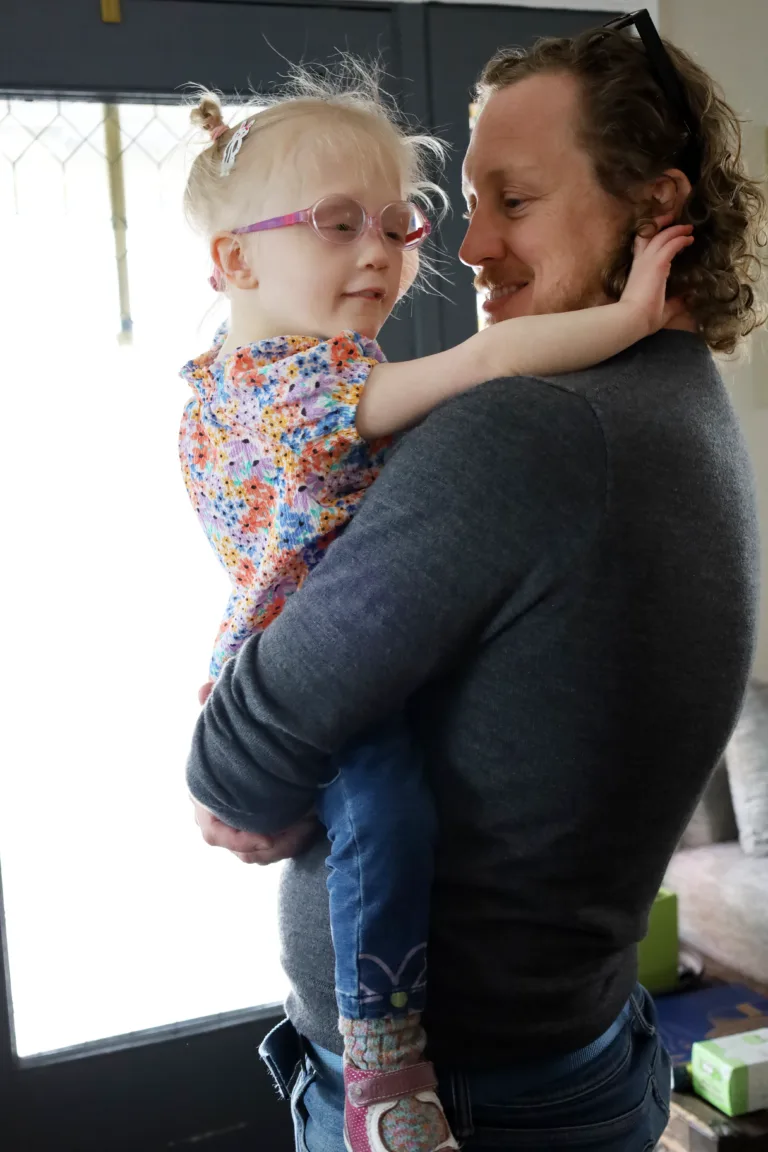
Swinging is another place where everything seems to settle into alignment. She has a pink silk swing inside and a larger colorful swing in the yard. She relaxes into the motion almost instantly. At one point, her dad climbed in beside her, the two of them gently moving together and enjoying the beautiful weather.
The Work Families Carry
Over time, Molly’s parents have learned to navigate therapies, specialists, insurance approvals, equipment needs, and waitlists. They have learned the difference between providers who simply treat symptoms and providers who truly see Molly as a whole person.
This is the hidden labor many families carry. They become schedulers, advocates, researchers, transportation coordinators, medical historians, and caregivers, often while trying to remain just Mom and Dad.
Reliable in-home nursing support can lighten that load in meaningful ways.
In Molly’s home, her nurses provide consistency, trust, and someone who understands her rhythms. They understand what makes her smile, when she wants to keep swinging a bit longer, and how to provide the best sensory input—especially arm scratches on demand. They even help create some of the cutest hairstyles for Molly’s beautiful blonde hair.
It can create room for rest, consistency, and ordinary family life. It can allow parents to focus less on constant coordination and more on being present.
When the right support enters a home, the whole household can breathe differently.
Still Becoming
Molly’s story is still being written.
There are ongoing decisions about housing, equipment, therapies, and what the next season of independence will require. There are still barriers to navigate and questions to answer. But there is also momentum.
What stands out most about Molly’s family is not hardship, though they have known plenty of it. It is the life they have continued to build alongside it.
They have made room for beauty, movement, humor, and travel. They have created a home where support and artistry live side by side.
Lindsey noted that “a lot of things are starting to be possible,” thanks to the stability provided by Molly’s nurses. She is able to enjoy hobbies and moments of fun. Life is still hard, but they make decisions for Molly based on Molly’s needs, not forced by societal pressure.
At the center of this whole complex care system is Molly—growing, learning, and continuing to show everyone around her what is possible.
Be Part of Care That Makes a Difference
Whether you’re a family looking for support or a nurse looking for meaningful work, there’s a place for you here.
Get in touch to learn more about care or career opportunities with Tendercare.