Alexis learned something was different at her 20-week anatomy scan.
A two-vessel umbilical cord led to additional testing, then a heart echo at Children’s. That’s when she learned her son, Luca, had pulmonary atresia, a congenital heart condition that would require ongoing care and future surgeries as he grows.
Luca was born June 30. From the beginning, his life included oxygen support, feeding tubes, medications, sleep studies, airway surgery, and frequent appointments. For Alexis, learning how to care for a medically complex infant happened quickly and without much margin for error.
He came home from the hospital toward the end of September 2024.
On October 5, Luca became unresponsive at home. His dad performed CPR while Alexis called 911. The moment changed how safety felt in their house.
After that day, being alone with him felt overwhelming. Nights were especially hard. Every pause in breathing carried weight.
What Support at Home Changed
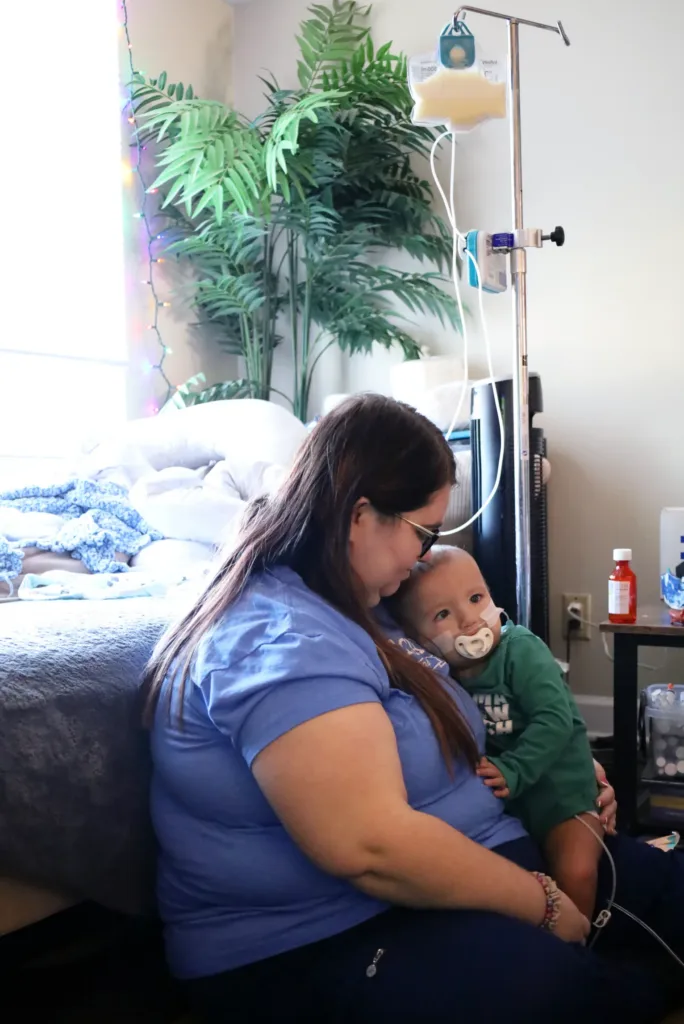
Today, Luca still has complex medical needs. He wears oxygen due to severe obstructive sleep apnea and receives nutrition through a GJ feeding tube. He takes multiple daily medications and continues to be followed closely by specialists.
What has changed is how supported his family feels managing that care at home.
Home health services created consistency. There is someone in the house who understands Luca’s baseline, knows what to watch for, and can respond with experience instead of panic. That presence matters, especially after trauma.
For Alexis, it has meant feeling more secure caring for Luca day to day and less alone when questions or concerns come up. It has also meant fewer moments of uncertainty turning into emergency situations.


Progress the Reflects Stability
Luca’s progress hasn’t been dramatic. It has been steady.
He wasn’t moving much for a long time. Now he scoots across rooms, heads toward doors, and follows his curiosity. Mobility became a milestone that signaled more than movement. It showed strength, coordination, and confidence.
He also drinks from a sippy cup now. That’s significant for a child with a feeding tube. He has started eating by mouth in small ways and has clear preferences. He likes yogurt, mashed potatoes, and sweet foods. Baby food is not his thing.
These changes didn’t happen all at once. They came through routine, repetition, therapy, and care that could happen consistently at home.
A Normal Kind of Brotherhood
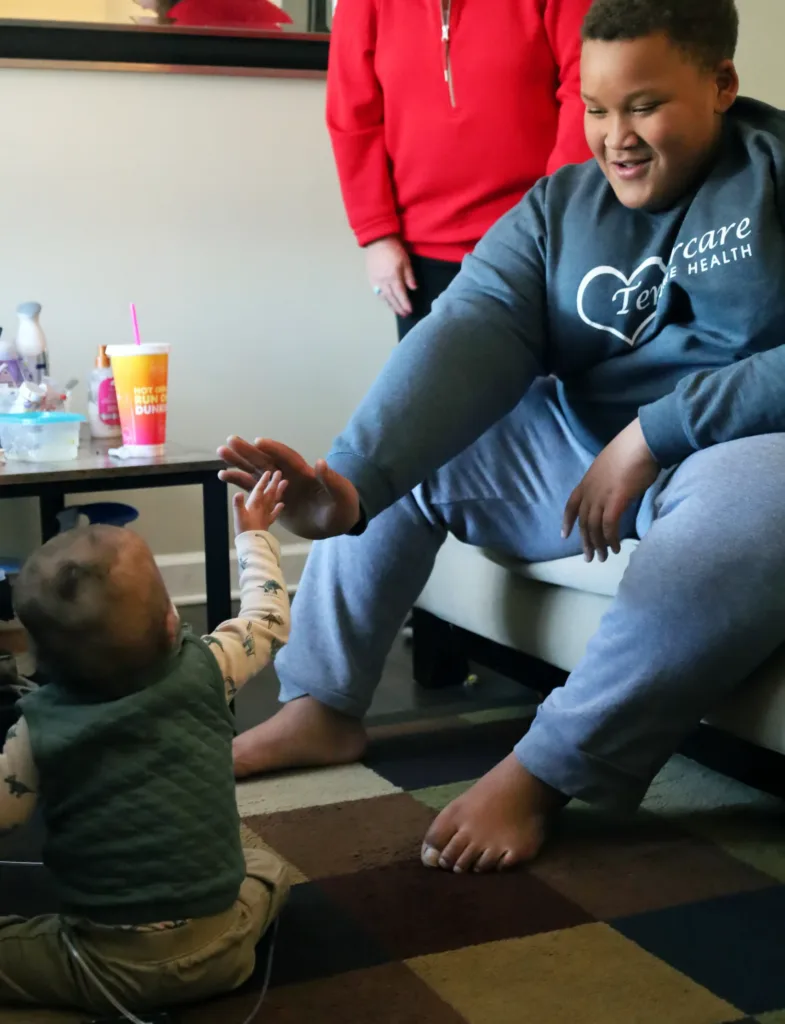
The day Luca’s story was shared, his big brother Nico was home from school for a holiday. The house was busy in a way families recognize immediately—noise, movement, and constant interaction between the two boys.
Nico drifted in and out of the room, teasing Luca just enough to get a reaction. Luca tracked him closely and reached for him whenever he came near. They pestered each other, laughed, and tested limits the way siblings do.
What stood out most was how ordinary it felt.
Nico didn’t see Luca as fragile or defined by his medical needs. He saw a little brother—one to mess with, protect, and include without thinking about it. There was no carefulness, no distance, no sense that Luca needed to be handled differently.
Just two brothers, clearly bonded, sharing a normal day together.
Care That Feels Personal in a Small Community
In Lawrenceburg, relationships matter. Families overlap. People know each other.
Luca’s nurse already knew Alexis before working with their family. That familiarity helped build trust quickly and made home health feel less intrusive and more supportive.
Inviting someone into your home is an adjustment. Over time, consistency made the difference. Care became part of the household rhythm instead of something that disrupted it.
That kind of relationship matters when caring for medically complex children. Trust makes it easier to ask questions, notice changes, and feel confident making decisions.
Keeping Families Out of Constant Crisis Mode
For families like Luca’s, hospital care is always close to the surface. When something feels off, escalation can happen fast.
Skilled care at home helps identify concerns earlier, manage daily routines more safely, and reduce unnecessary hospital visits. It also helps parents feel capable instead of constantly on edge.
Home health doesn’t remove the complexity of Luca’s condition—it changes how manageable that complexity feels.
Today, Alexis feels more comfortable caring for him. The fear that followed his early hospitalization hasn’t disappeared, but it no longer defines every moment.

Growing Forward
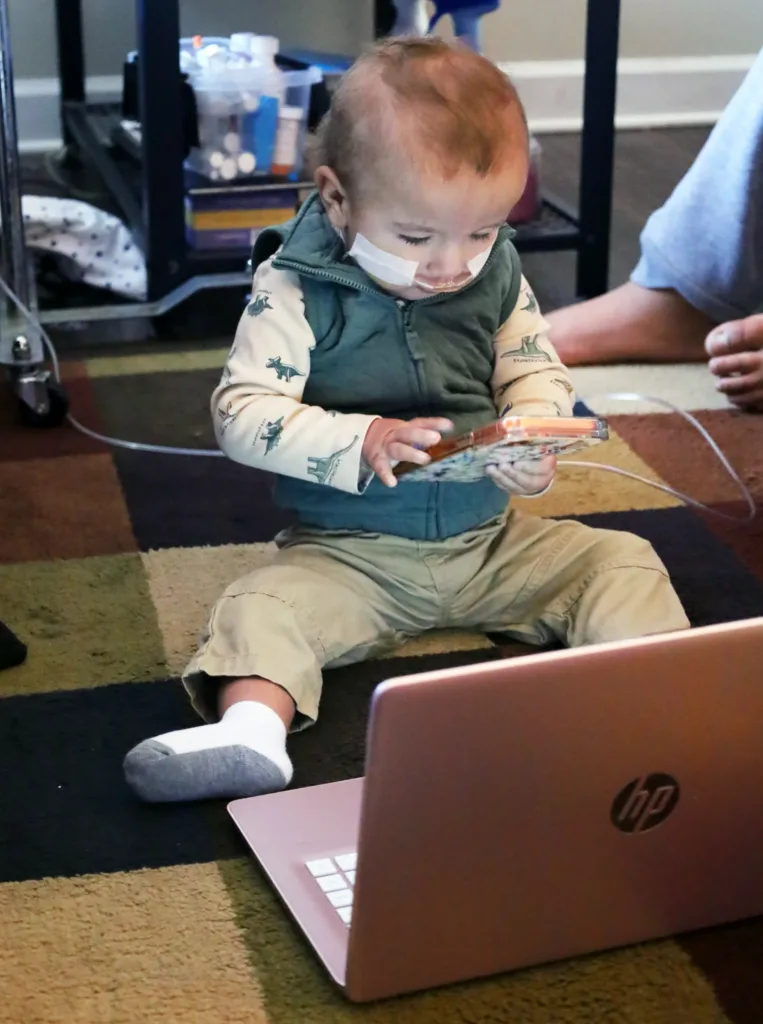
Luca lives in a house full of movement, opinions, and noise. He scoots instead of crawls. He knows a fake phone when he sees one. He wants to be involved in whatever is happening around him.
His story isn’t about overcoming a diagnosis. It’s about building a life around it, supported by people who understand both the medical needs and the human ones.
And in Lawrenceburg, that life includes community, consistency, and support that helps families feel safer caring for their children at home.
Wondering if home health could help your family feel safer at home?
You don’t have to navigate it alone. Our team is here to help families understand their options and feel more supported at home.